
Home | MyGov

Accessibility
Accessibility Tools
Color Adjustment
Text Size
Navigation Adjustment
Screen Reader iconScreen Reader

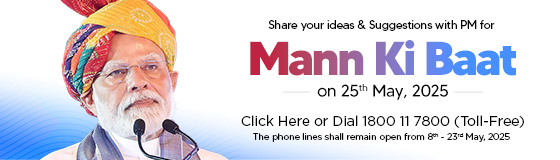
Inviting Ideas for Mann Ki Baat by Prime Minister Narendra Modi on 25th May 2025

Inviting Ideas for Mann Ki Baat by Prime Minister Narendra Modi on 25th May 2025
Start Date :
May 08, 2025
Last Date :
May 23, 2025
23:45 PM IST (GMT +5.30 Hrs)
Submission Closed

Hon'ble PM Narendra Modi looks forward to sharing his thoughts on themes and issues that matter to you. Prime Minister invites you to share your ideas on topics he should address ...

Hon'ble PM Narendra Modi looks forward to sharing his thoughts on themes and issues that matter to you. Prime Minister invites you to share your ideas on topics he should address on the 122nd Episode of Mann Ki Baat.

Send us your suggestions on the themes or issues you want the Prime Minister to speak about in the upcoming Mann Ki Baat episode. Share your views in this Open Forum or alternatively, you can also dial the toll-free number 1800-11-7800 and record your message for the Prime Minister in either Hindi or English. Some of the recorded messages may become part of the broadcast.

You can also give a missed call on 1922 and follow the link received in SMS to directly give your suggestions to the Prime Minister.

And stay tuned to Mann Ki Baat at 11:00 AM on 25th May 2025.

Reset
Showing 1934 Submission(s)
GloryMishra
GloryMishra 1 year 3 months ago
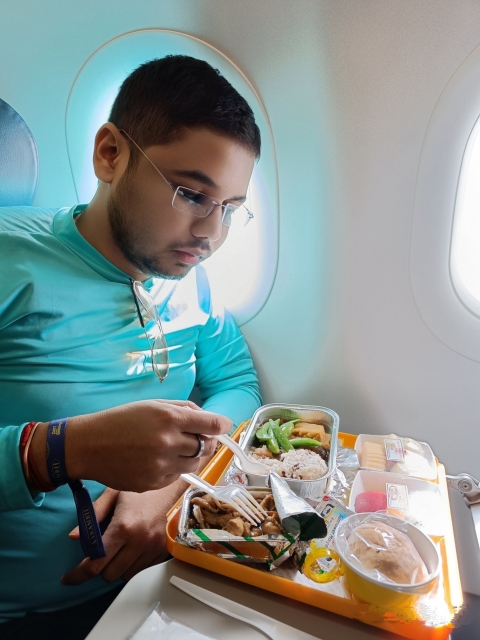
Honourable Prime minister should talk about encouraging healthy food on gov sites, public canteens should host a vast variety of healthier and tastier options than unhealthy ones to encourage a fit mind, fit body, that automatically ensures excellency in work performance of individuals, also the food quality of armed forces shall be checked as they proved to be immensely important during times like now.
SANJAY SARKAR
SANJAY SARKAR 1 year 3 months ago
have been marked by a complex blend of historical grievances, territorial disputes, and moments of diplomatic engagement. Since the partition of British India in 1947, both countries have experienced frequent periods of conflict and limited cooperation.  India Pakistan relations remain one of South Asia’s most critical geopolitical issues, affecting regional stability, global diplomacy, and economic potential. Over the decades, the bilateral relationship has been marked by wars, cross-border terrorism, and intermittent diplomatic engagements.​..
patel piyush ashokbhai
patel piyush ashokbhai 1 year 3 months ago
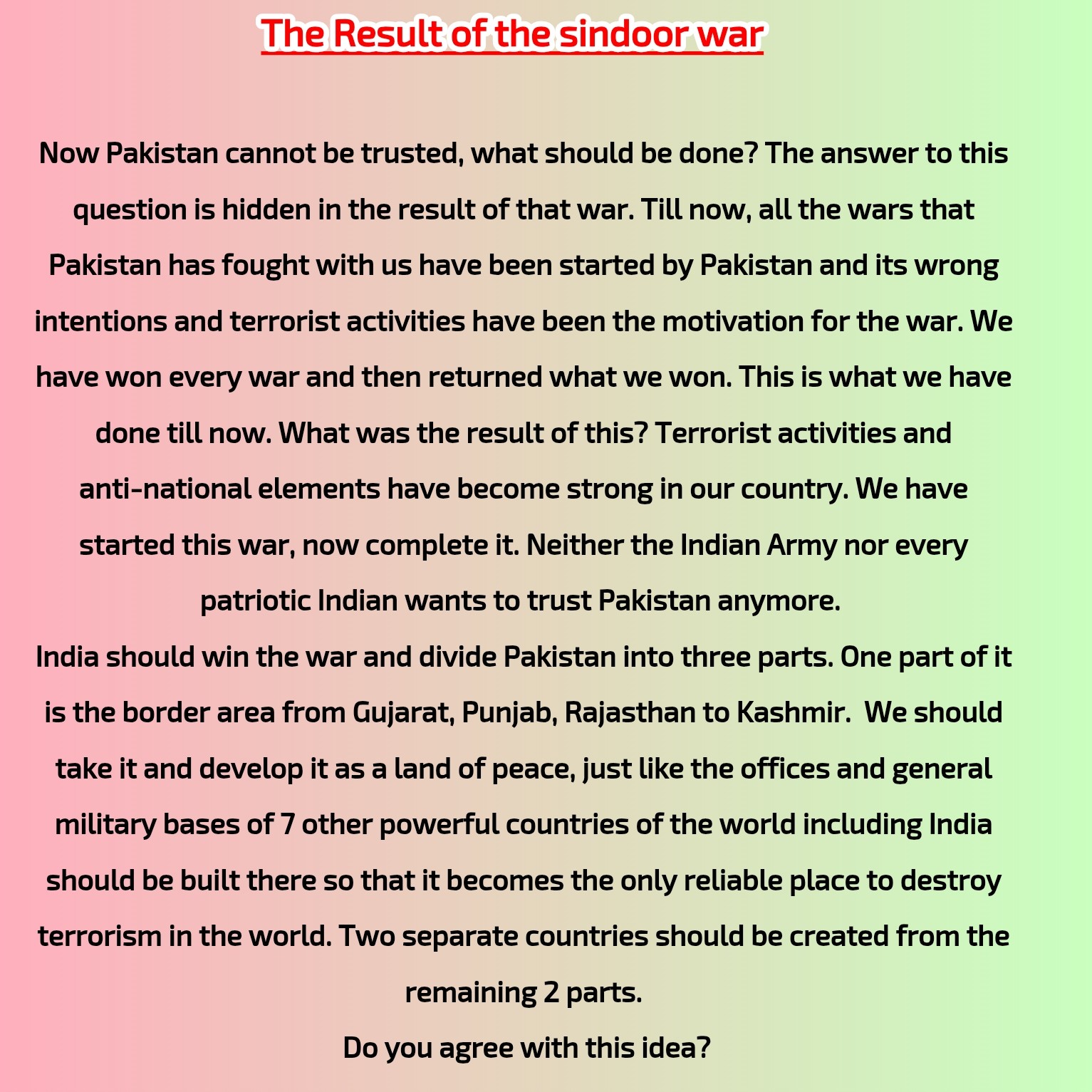
The Result of The sindoor war.... આ યુદ્ધ નું નીચે ઈમેજ માં દર્શાવ્યુ છે. તેવું પરિણામ મળે તો વિશ્વના દરેક આતંકવાદી અને તેમને સહયોગ કરનારા લોકોને સ્પષ્ટ સંદેશ મળે કે આતંકવાદ વિરૂદ્ધ બધા જ દેશ એક છે👆
mygov_17472069233475081
mygov_17472069033475081
SANJAY SARKAR
SANJAY SARKAR 1 year 3 months ago
: No longer distinguishes between state and non-state actors. OODA Loop Strategy: Rapid and unpredictable retaliation. Key Actions: Balakot airstrike (2019) Operation Sindoor Global Diplomacy: Building international support for retaliation. Hyphenation Attempt: Seeks parity with India on the world stage. Kashmir Focus: Tries to keep issues on global agenda. Third-party Mediation: Frequently invited, mostly rejected by India. Narrative Warfare: Promotes victimhood narrative abroad.
SANJAY SARKAR
SANJAY SARKAR 1 year 3 months ago
Why Ceasefires with Pakistan Often Fail? Zero-sum Doctrine: Pakistan treats peace as a strategic pause, not resolution. Tactical Use: Uses ceasefires to regroup militarily. Historical Pattern: Kargil War (1999) came after a ceasefire. Deep state tactics often override official commitments. Emotional Symbolism: For Pakistan: Kashmir = Muslim identity For India: Kashmir = national sovereignty Ideological Divide: Rooted in identity and ideology, not just territory.
SANJAY SARKAR
SANJAY SARKAR 1 year 3 months ago
The fragile ceasefire highlights the persistent ideological divide, Pakistan’s use of proxy warfare, and India’s evolving security doctrine. Long-term peace depends on mutual credibility, sustained restraint, and dismantling of state-sponsored terror networks
SANJAY SARKAR
SANJAY SARKAR 1 year 3 months ago
After three days of intense hostilities, India and Pakistan reached an "understanding" to stop all military action and firing. The announcement was made by External Affairs Minister S. Jaishankar on May 10, 2025.
SANJAY SARKAR
SANJAY SARKAR 1 year 3 months ago
Although U.S. initially adopted a hands-off approach, it re-engaged as hostilities escalated. U.S. National Security Adviser Marco Rubio facilitated calls between Delhi and Rawalpindi. Still, India and Pakistan demonstrated the ability to manage escalation directly — a shift from the heavily mediated past.
SANJAY SARKAR
SANJAY SARKAR 1 year 3 months ago
Q1. Why did India and Pakistan agree to a ceasefire? Ans. To stop hostilities after the Pahalgam terror attack and ensuing intense military engagement across borders. Q2. Was the ceasefire mediated by a third party? Ans. No. India emphasized it was a bilateral decision, contrary to U.S. claims of brokering the agreement. Q3. How has India’s military stance changed? Ans. India has shifted toward deep strikes and reduced restraint, aiming to deter terror by redefining engagement rules. Q4. What is the role of the Indus Waters Treaty now? Ans. India suspended it, signaling a tougher stance that includes water as leverage in future negotiations. Q5. What reforms does India seek post-conflict?