Home | MyGov

Accessibility
Accessibility Tools
Color Adjustment
Text Size
Navigation Adjustment
Screen Reader iconScreen Reader

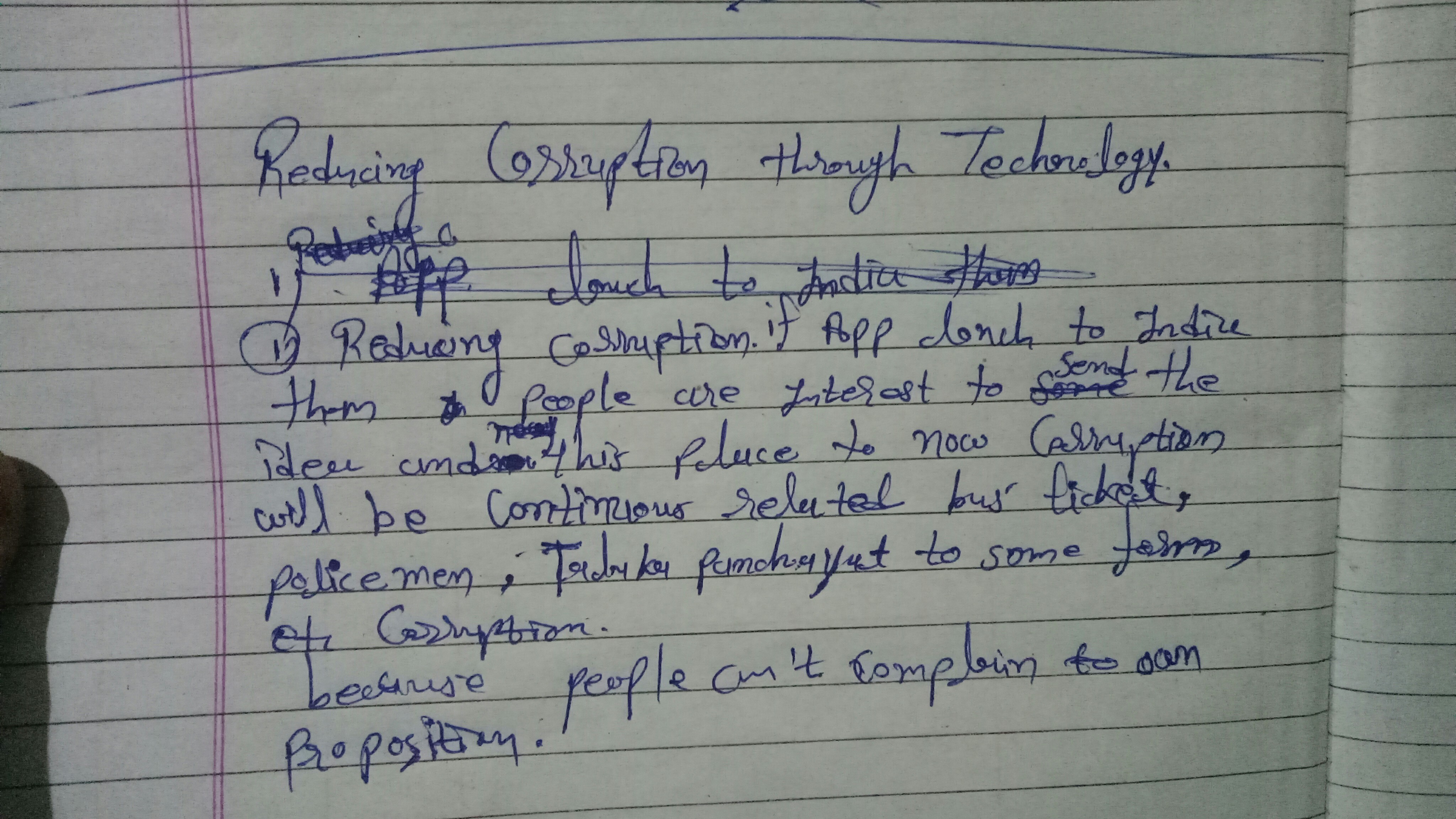
Reducing Corruption through Technology

Start Date :
Mar 04, 2018
Last Date :
Mar 31, 2018
00:00 AM IST (GMT +5.30 Hrs)
Submission Closed

In the past three years, the Government has endeavoured to remove corruption in every form and technology presents itself as one of the most potent tools. But, technological ...

In the past three years, the Government has endeavoured to remove corruption in every form and technology presents itself as one of the most potent tools. But, technological interventions work when the interventions are simple, transparent and include a public feedback mechanism. Utilising advancements in technology, the Government is following a multi-pronged strategy to tackle the problem in an effective manner

1. Transferring benefits directly to beneficiaries
2. Making government procurements transparent
3. Digitization of service deliveries
4. Promoting Cashless Transactions
5. Jan Bhagidari
6. Open Government Data

Direct Benefit Transfer was a significant step towards plugging leakages. Amount transferred via DBT is increasing and leakages are reducing. The government has laid equal emphasis on citizens getting Aadhaar. The Jan Dhan-Aadhaar-Mobile (JAM) trinity will bring complete accountability in monetary transactions and eliminate ghost beneficiaries.

Additionally, Government e-Marketplace (GeM) was launched to make government procurements simple and transparent, eliminating any scope of corruption. Faceless e-assessment for income tax payers introduced from 2018 was another important step. Tax officers now communicate with the taxpayers through the ‘E-Proceeding' facility which reduces human interface.

The fight against corruption is a long and arduous one. Various online platforms have been introduced by the government, wherein the citizens can join forces with them by sharing their feedback and views. The decision to involve the honest citizens of our country in the fight increases the strength of the force against corruption to a great extent.

In the same vein, MyGov invites citizens to share their ideas on how technology can be used to uproot corruption and suggest innovations to fight the malice in an effective manner. Ideas and suggestions can be provided in the form of a comment below or by attaching a PDF document.

Reset
Showing 1876 Submission(s)
Amol Dhondiram Kadam
Amol Dhondiram Kadam 8 years 5 months ago
1) Before Administrative approval for purchase /new project - third party investigation carried out and as per the recommendations the approvals may be given. 2) One separate website should be launched with free access to all pleoples where they can post their complaints with proofs. 3)Effective implementation of right to service act 4)Effective contributions of the think tanks to mitigate the lacunas in transparency 5)rationalization of the staff working in different departments etc etc
chandrashekara
chandrashekara 8 years 5 months ago
What is the future of lakhs of poor students who passed or going to pass AMIE if their hard-earned certificate goes unrecognized? Whether they have to commit suicide? Why is AICTE refusing to recognise AMIE? To enhance the business of private colleges? B.E. B.Tech holders are better than AMIE holders? If so, in what way? In AMIE, there are no internal marks, passing marks is 50, Question papers are very hard, students have to study on their own, and so on. AMIE students are better than BTech
chandrashekara
chandrashekara 8 years 5 months ago
Engineering Education in India became very costly in India due to many reasons. Poor students are struggling for their daily bread and butter, can't pay the huge amount of fees to colleges. Lakhs of poor students are doing AMIE from Institution of India, Kolkata. Previously, MHRD was giving recognition. In the year 2013 MHRD handed over the responsibility to AICTE. Corrupt AICTE is in favour of private colleges, and not giving recognition to AMIE. Case is running in supreme court since 2013.
Prosanta Ghosh
Prosanta Ghosh 8 years 5 months ago
I think first we need to categorize the kind of corruption happening. Then measure the level of corruption and quantify it. After that we need to talk about solution. A govt hospital doctor neglecting his duties is more dangerous than a police taking 100 Rs bribe. To measure the corruption, we should develop a national rating /feedback service for all government/ private services delivered to citizens. We should continuously take feedback from citizens for all services they receive.