Home | MyGov

Accessibility
Accessibility Tools
Color Adjustment
Text Size
Navigation Adjustment
Screen Reader iconScreen Reader

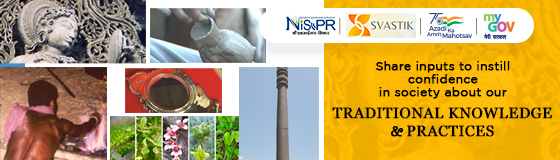
Share inputs to instil confidence in society about our traditional knowledge and practices

Share inputs to instil confidence in society about our traditional knowledge and practices
Start Date :
Mar 03, 2022
Last Date :
Aug 31, 2022
23:45 PM IST (GMT +5.30 Hrs)
Submission Closed

India has a rich legacy of practices and knowledge touching different spheres of life and a scientific heritage traversing various Science & Technology (S&T) domains. The ...

India has a rich legacy of practices and knowledge touching different spheres of life and a scientific heritage traversing various Science & Technology (S&T) domains. The traditional knowledge of India is available in various forms such as classical texts, manuscripts and/or as oral communication that has been passed on over thousands of years. This valuable knowledge is often part of our daily practices as well. Some of the traditional practices are livelihood means of the concerned knowledge holders. Our traditional practices exist in synergy between human needs and nature, often balancing resources and requirements in a local context. However, with time, India’s Traditional Knowledge Systems are eroding rapidly, and the nation has also been witnessing erosion in people’s faith towards our traditional knowledge. A grave concern is the mindless attitude of some to mimic non-Indian cultures and disdain for our traditions. It’s important to recognize that traditional heritage is an integral part of any country’s development and progression. This calls for necessary attention and action from the concerned stakeholders in the country to build further on our scientific inheritance. Only a well-informed and balanced society can drive the advancement of the country.

Under the visionary leadership of our Hon’ble Prime Minister and President, CSIR Society, Shri Narendra Modi, the Council of Scientific and Industrial Research (CSIR) is spearheading the efforts to collaborate with the relevant partners from across the country and implement the national initiative SVASTIK (Scientifically Validated Societal Traditional Knowledge) for communicating India’s traditional knowledge to the society. CSIR-National Institute of Science Communication and Policy Research (CSIR-NIScPR) is the nodal organization to implement this national initiative.

The prime mission of the initiative is to conserve scientifically validated traditional practices, and instil confidence in citizens regarding the scientific values of our traditional knowledge/practices.

We invite the suggestions of academicians, researchers, subject-matter experts, students, NGOs, and the public on how to instil confidence in society about our traditional knowledge and practices. This will help us in our mission to inculcate a scientific temper and instil confidence in citizens by stimulating the Science-Scientist-Society connect towards our traditional knowledge and practices.

Click here to read more about the SVASTIK Initiative of CSIR-NIScPR. (PDF 1519 KB)
Or visit the website - https://niscpr.res.in/nationalmission/svastik

How much are you aware of our traditional knowledge and practices? Participate in MyGov quiz and check your awareness of the traditional knowledge of India. Quiz Link: https://quiz.mygov.in/quiz/quiz-on-indian-traditional-knowledge/

The last date to share your ideas and suggestions is 31st August 2022.

Reset
Showing 2022 Submission(s)
Sangeeta
Sangeeta 4 years 3 weeks ago
श्रीमान , नरेंद्र मोदी जी आज के समय में हमारा देश बहुत आगे निकल रहा है जिसके लिए पारंपरिक ज्ञान का होना समाज में उतना ही जरुरी है जैसे एक शिक्षा को ग्रहण करना होता है जो समाज का एक अंग है। सब को इसे जोडे रखना चाहिए जिसे मानव का विकास होता है समाज की परंपरा ही समाज को एक ज्ञान का स्वरूप देता है जो मानव की शिक्षा को उजागर करता है। मेरा माना है की हमारे देश की परंपरा का ज्ञान हमारे देश को समाज से जोड़ा रखता है जिसे देश का उत्थान होता है और ये परंपरा हमारा ज्ञान बढ़ाती है . समाज में इसकी जानकारी सबको होनी चाहिए ! सादर अधिवक्ता संगीता 🙏
PARESH KUMAR LABLA
PARESH KUMAR LABLA 4 years 3 weeks ago
The present generation are going apart from the traditional methods which is a very serious concern for our society because the traditional methods are always less harmful towards living organisms and as well as for the natural environments. As we know that in today's world we need modern methods to fullfill the human needs but many of the modern method have environmental hazards. so we need to integrate the traditional methods with modern methods to meet the human needs as well as for a sustainable development.
Kalyani Vishwanath Jog
Kalyani Vishwanath Jog 4 years 3 weeks ago
we are having lots of herbal trees which are helpful for curing high risk diseases but are unknown about the uses. When I had attended the botanical garden in kashmir I have seen lots of herbal tress but the problem is that no one is able in explaining the benefits of the plants there which is young in age i.e. today's generation. Only some old (1-2) people explaining about the plant. I had seen plants there which are helpful in curing diabetes, BP, and cancer also. There are localities who made perfumes which are helpful in Insomnia(Persistent problems falling and staying asleep) which is common in this digital era. But we are not utilising our natural resources fully . And the same case in another botanical garden as well, the purpose behind botanical garden refused by people. They came to hinder here and there or else we are seeing love birds there. Better not to talk about it.
Prajeev Prabhakaran
Prajeev Prabhakaran 4 years 3 weeks ago
Before the advent of the Scientific Knowledge of preserving Food in a Refrigerator or Processing Food with preservatives, Industrialization where so-many Seeds extracted to produce Oil etc..., People used to Hunt, Feast on the catch and then fast (though involuntarily out of compulsion - Not Today's Three Meals or Plus Three Snacks stuff :) ) those folks used to have a Life expectancy of 100-150 Years some studies show as being claimed by some Scientists. https://www.youtube.com/watch?v=RuOvn4UqznU
Kalyani Vishwanath Jog
Kalyani Vishwanath Jog 4 years 3 weeks ago
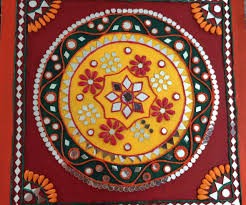
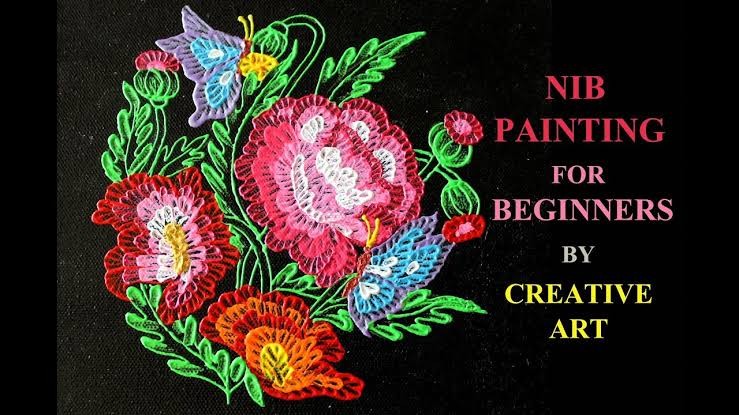
The courses like below must be provided online on the government platform like NPTEL. To all the age groups who what to do that courses. And provide them either training, for selling these items on the social media platforms like instagram, or directly buy the (target based) products from the students who opted for the course. So that, they will earn while learning. As earning while learning is important in today's era. It also boosts knowledge and helpful for students to get promoted. The courses must be offered are as follows - 1)crochet-a way of making clothes, cloth, etc. by using wool or cotton and a needle with a hook at one end, 2)macrame-the art of knotting string in patterns to make decorative articles. and 3)lippan art -The word 'Lippan' means 'clay' or 'dung' in local Gujarati, and the word 'kaam' denotes 'work'. Lippan Kaam is essentially mud-relief work that incorporates mirrors. 4) nib painting -Art form that involves use of special nibs, instead of brush, to paint on
mygov_165920432254759511
mygov_165920433154759511
mygov_165920434554759511
mygov_165920435554759511
Dr Anju Rathore
Dr Anju Rathore 4 years 3 weeks ago
पारम्परिक ज्ञान और जीवन जीने का तरीका पर्यावरण के अनुकूल है और कम खर्चीला भी।