Home | MyGov

Accessibility
Accessibility Tools
Color Adjustment
Text Size
Navigation Adjustment
Screen Reader iconScreen Reader

Share inputs to instil confidence in society about our traditional knowledge and practices

Share inputs to instil confidence in society about our traditional knowledge and practices
Start Date :
Mar 03, 2022
Last Date :
Aug 31, 2022
23:45 PM IST (GMT +5.30 Hrs)
Submission Closed

India has a rich legacy of practices and knowledge touching different spheres of life and a scientific heritage traversing various Science & Technology (S&T) domains. The ...

India has a rich legacy of practices and knowledge touching different spheres of life and a scientific heritage traversing various Science & Technology (S&T) domains. The traditional knowledge of India is available in various forms such as classical texts, manuscripts and/or as oral communication that has been passed on over thousands of years. This valuable knowledge is often part of our daily practices as well. Some of the traditional practices are livelihood means of the concerned knowledge holders. Our traditional practices exist in synergy between human needs and nature, often balancing resources and requirements in a local context. However, with time, India’s Traditional Knowledge Systems are eroding rapidly, and the nation has also been witnessing erosion in people’s faith towards our traditional knowledge. A grave concern is the mindless attitude of some to mimic non-Indian cultures and disdain for our traditions. It’s important to recognize that traditional heritage is an integral part of any country’s development and progression. This calls for necessary attention and action from the concerned stakeholders in the country to build further on our scientific inheritance. Only a well-informed and balanced society can drive the advancement of the country.

Under the visionary leadership of our Hon’ble Prime Minister and President, CSIR Society, Shri Narendra Modi, the Council of Scientific and Industrial Research (CSIR) is spearheading the efforts to collaborate with the relevant partners from across the country and implement the national initiative SVASTIK (Scientifically Validated Societal Traditional Knowledge) for communicating India’s traditional knowledge to the society. CSIR-National Institute of Science Communication and Policy Research (CSIR-NIScPR) is the nodal organization to implement this national initiative.

The prime mission of the initiative is to conserve scientifically validated traditional practices, and instil confidence in citizens regarding the scientific values of our traditional knowledge/practices.

We invite the suggestions of academicians, researchers, subject-matter experts, students, NGOs, and the public on how to instil confidence in society about our traditional knowledge and practices. This will help us in our mission to inculcate a scientific temper and instil confidence in citizens by stimulating the Science-Scientist-Society connect towards our traditional knowledge and practices.

Click here to read more about the SVASTIK Initiative of CSIR-NIScPR. (PDF 1519 KB)
Or visit the website - https://niscpr.res.in/nationalmission/svastik

How much are you aware of our traditional knowledge and practices? Participate in MyGov quiz and check your awareness of the traditional knowledge of India. Quiz Link: https://quiz.mygov.in/quiz/quiz-on-indian-traditional-knowledge/

The last date to share your ideas and suggestions is 31st August 2022.

Reset
Showing 2022 Submission(s)
Harihara reddy
Harihara reddy 4 years 1 month ago
Education is for self defence and to protect our environment which save our biodiversity . Knowledge is education which we learn from nature with our activities . Intellectual act and develop knowledge and preserve for progress instead of searching same knowledge . Energy is a basic problem and we have our ancestors traditional knowledge in the name of perpetual motion machines or Indo Persian machines . But are neglected and followed others prohibited impossible laws , Is it not considerable fact in our education ? .Let us think Lalla, Bramha gupta , Bhaskaracharya knowledge on Perpetual motion machines and restore our culture , others changed ignored impossible laws and trying for perpetual motion machines to protect climate and financial support . Our cultural values are not less than any culture but we are forced to change and we partially unable to protect ourselves .Learned persons move forward like Bhudda to survive ourselves from dirty politics . Jai Bharat , Jai jai Bharat
P Engan Murugan
P Engan Murugan 4 years 1 month ago
Whatever we think or feel which is unique to our nation other than rest of countries must be motivated, encouraged and boosted upon through a special ministry ie. Ministry of Traditions will promote our culture and also supports other ministries like tourism etc.
Nishant singh
Nishant singh 4 years 1 month ago
हमारे ज्ञान की पद्धति में बदलाव की बेहत जरूरत है हमे बहुत से ऐसे विषय पढ़ाये जाते है जिनका हमारे जीवन मे कोई उपयोगिता होती ही नही है।इस विषय मे चिन्ता करने की जरूरत है उच्चायुक्त को।धन्यवाद
Divakaran Narayanan
Divakaran Narayanan 4 years 1 month ago
The Hindu Vedic culture celebrates certain rites and rituals on every human life There are 16 The important ones are Marriage Couples giving birth to children During pregnancy s ceremony on 7 th month called Simantham praying God for well off delivery After birth naming the child on 11 th day on third or 4 th month taking out the child for sunrise and sunset and to Temple Then on 6th month Feeding solid food The. 7th month ear boring for ear health On completion of one year shaving the head and cutting nails a hygeinic measure The. ay the age of 5 starting Education and to continue upto 12 years Then starting Adult life after seeking employment Then After maturity of Boys facial shaving and hair cutting For Girls on attaining puberty maintaining a lady for future generation This is the stage for Marriage Then after discharging family duty both to go for spiritual life
Vivek Kumar sahu
Vivek Kumar sahu 4 years 1 month ago
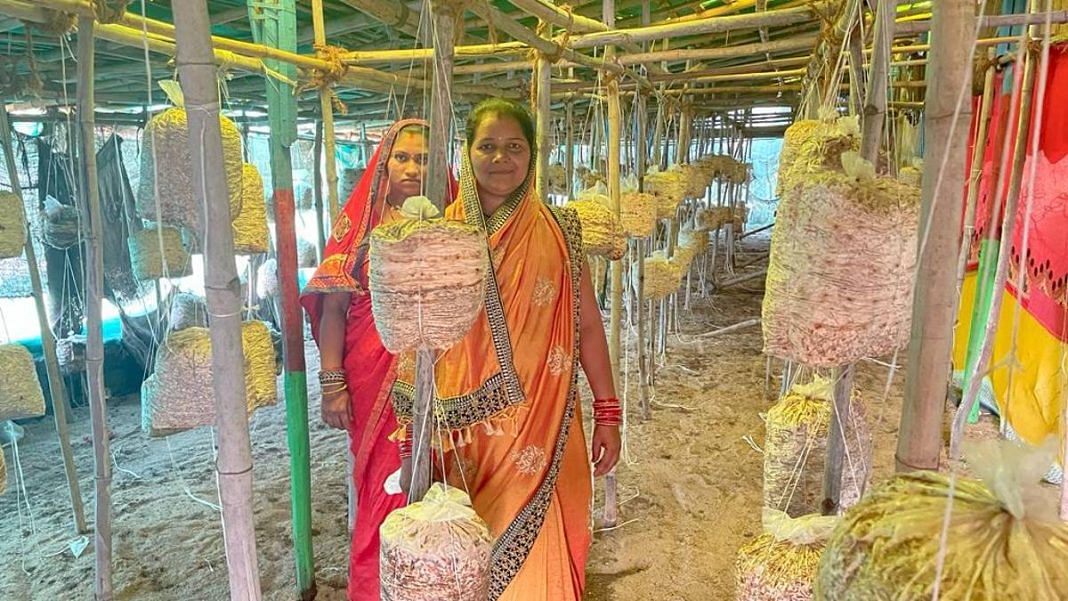
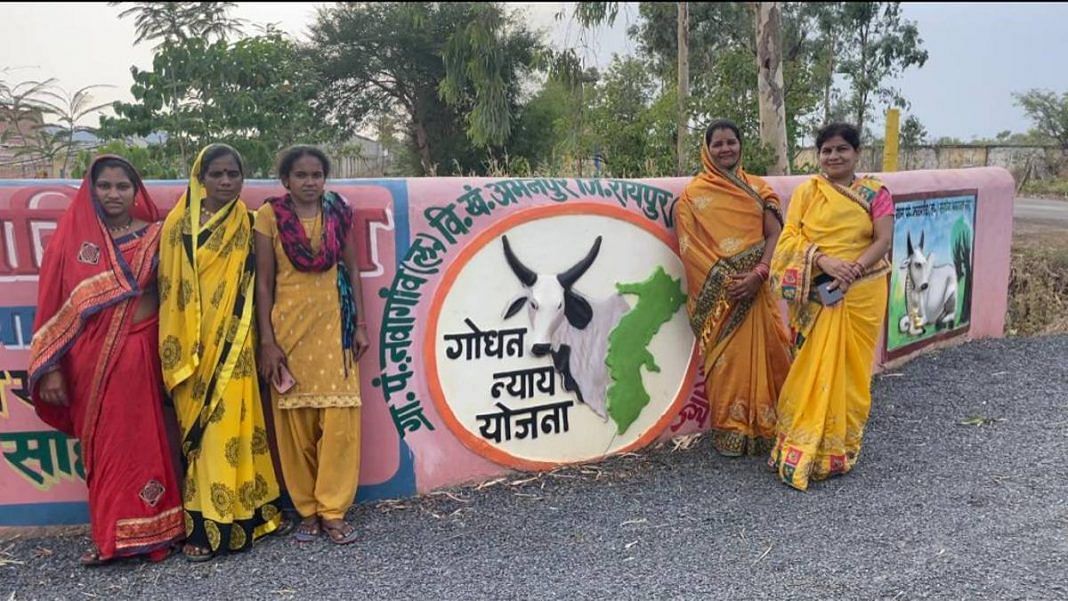
What started as cow welfare scheme is now a well earning rural industrial hub making soaps, growing mushrooms, pisciculture, incense sticks and helping rural woman to form self help group
Vivek Kumar sahu
Vivek Kumar sahu 4 years 1 month ago
The cow dung procurement and composting scheme led to the setting up of gauthans, where cattle could be kept for the day and looked after. The cow dung collected would then be sold to the government. The gauthans gradually started housing vermicompost pits and mushroom farm. Employees included women from SHGs in the villages in which the gauthans were located.
mygov_165692181980617701
Vivek Kumar sahu
Vivek Kumar sahu 4 years 1 month ago
Chhattisgarh’s gobar revolution is helping rural women What started as cow dung procurement & organic fertiliser production scheme in 2020 is helping state give rural economy a push.
mygov_165692166180617701
Divakaran Narayanan
Divakaran Narayanan 4 years 1 month ago
Food habits of Tamil tradition Morning Idli Samba chatni or Idiyappam cooked in steam are best for morning In villages Millets like Ragi and Cumbu based food for health and strength Noon lunch Rice curd Rasam side dishes of vegetables and banana in banana leaf are digestible Night dinner Rice or Tiffin lightly without much oilcontent Blackgram white flour mixed with palm gur adding cardomom best for mature ladies and family ladies for strengthening hip and lightening menstrual proccess
SHRAVAN  KUMAR
SHRAVAN KUMAR 4 years 1 month ago
Paramparik gyan ko adhik se adhik logon Tak pahunchana chahie use Gyan ka upyog hona chahie, sabhi log use gyan ko samjhenge ,pahchan , ckbhi samjbe hamare paramparik gyan ko hamen Vishva mein bhi pahchan dilani chahie hamare Desh Ka Naam Roshan Ho!